Reviving the 90s Edge: How the Boogie Blast Font is Shaping Contemporary Visual Culture
In the fast-paced world of digital design, where clean minimalism and geometric sans-serifs have long reigned supreme, a powerful counter-movement is gaining momentum. Creatives and brands are reaching back into the vibrant, unapologetic aesthetic of the past, specifically the raw energy of 1990s street art. At the forefront of this revival is Boogie Blast, a retro graffiti typeface that is less a mere font and more a declaration of style. It is a tool for those who refuse to blend in, offering a direct line to the expressive power of hip-hop culture, skateboarding heritage, and urban authenticity.
Understanding the Anatomy of Boogie Blast
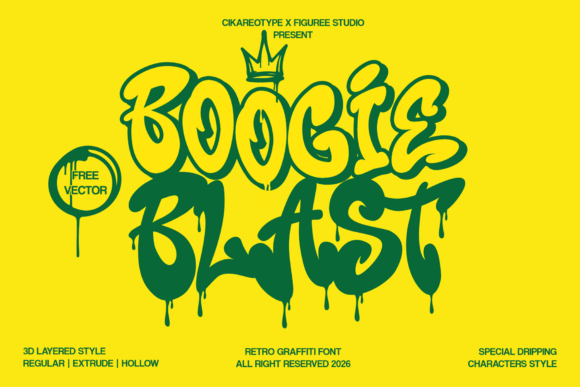
Boogie Blast is not just a collection of letters; it is a carefully crafted system designed to mimic the spontaneity and depth of hand-drawn graffiti throw-ups. What sets it apart in a crowded market of display fonts is its commitment to dimensionality and texture. The typeface features bouncy, rhythmic letterforms that feel alive, capturing the kinetic energy of a spray can in motion. This is not a sterile digital rendering; it possesses a "heavy visual weight" and a "bubbly silhouette" that commands immediate attention.
The true versatility of the font lies in its specific style variations:
- The Regular Style: This serves as the foundational layer, offering solid, impactful characters that provide the primary message. It captures the core shape of the graffiti aesthetic with a heavy, rounded structure.
- The Extrude Style: This layer adds a critical third dimension. By applying a shadow or block effect, the Extrude style lifts the typography off the page, creating a 3D effect that mimics the perspective often seen in street murals. It provides depth and a sense of physical presence.
- The Hollow Style: For more complex compositions, the Hollow style allows designers to create outlines or negative space effects. This is essential for layering, allowing the text to sit over busy backgrounds without losing legibility, or for creating a "wireframe" look that is popular in retro branding.
Together, these styles allow for the creation of authentic "throw-ups" and "pieces" digitally, a workflow that previously required advanced illustration skills. The inclusion of dripping character styles further cements its authenticity, nodding to the wet paint aesthetic that defines the genre.
The Cultural Context: Why Retro Graffiti is Trending Now
The resurgence of Boogie Blast is not an isolated event; it is a symptom of broader cultural and consumer trends. We are currently witnessing a massive wave of nostalgia, particularly for the late 80s and 90s, among both Millennials who lived through it and Gen Z consumers who romanticize the pre-digital era's analog grit.
This shift represents a reaction against the "flat design" fatigue. For years, tech interfaces and corporate branding stripped away shadows, gradients, and textures in favor of ultra-clean usability. While functional, this approach often lacked soul. Today’s audience—raised on a diet of saturated digital content—craves texture, noise, and imperfection. Boogie Blast answers this call by providing a typeface that feels tactile and human, even when rendered digitally.
Furthermore, the rise of streetwear from a subculture to a dominant global fashion force has made this aesthetic mainstream. When luxury houses collaborate with skate brands and rappers, the visual language of the street becomes the visual language of commerce. Boogie Blast fits perfectly into this ecosystem, offering a typographic shorthand for "cool," "underground," and "authentic."
Practical Applications for Modern Creators
For professionals, entrepreneurs, and freelancers, understanding how to deploy Boogie Blast is key to staying relevant. Its application goes beyond simple logos; it is about creating an atmosphere.
1. Streetwear Branding and Merchandise
The most obvious application is in fashion, specifically within the streetwear sector. However, the smartest use of the font is not just on the front of a t-shirt. It is being used for swing tags, care labels, and packaging inserts. Using the Extrude style on a hang-tag creates a tactile experience before the customer even wears the garment. It signals that the brand understands the culture it is selling to.
2. Urban Music and Event Promotion
In the music industry, particularly within Hip-Hop, Trap, and Bass Music, visuals must match the intensity of the sound. Boogie Blast is an exceptional choice for festival posters and album art. Its heavy visual weight ensures that event details remain legible even on cluttered city billboards or small mobile screens. The rhythmic, bouncy nature of the font mirrors the beat of the music, creating a synesthetic connection between what the audience sees and what they hear.
3. Digital Content and Social Media
With the dominance of short-form video on platforms like TikTok and Instagram Reels, static text is often ignored. Boogie Blast combats this through its sheer visual volume. Content creators are using the Hollow style as a mask for video footage, allowing the texture of the video to fill the letters. This technique creates dynamic, eye-catching thumbnails and cover art that stop the scroll. It transforms standard announcements into high-energy visual statements.
4. Skate Culture Graphics
Skateboarding has always been the bedrock of graffiti culture. For skate brands, Boogie Blast is not just a font; it is a lineage. It is being utilized for deck graphics, wheel packaging, and ramp signage. The font’s ability to look "hand-done" helps brands maintain the DIY spirit that is central to skateboarding, even as the industry becomes more corporate.
Workflow and Technical Integration
One of the primary reasons for the growing adoption of Boogie Blast is its integration into modern design workflows. Historically, creating 3D graffiti lettering required hours in Adobe Illustrator, manually drawing shadows and highlights.
Today, designers are expected to move faster. By utilizing the three distinct styles of Boogie Blast (Regular, Extrude, and Hollow), designers can stack layers in software like Photoshop or Procreate to achieve a complex, 3D look in minutes. This efficiency allows freelancers to offer high-impact visuals to clients without spending billable hours on manual vector tracing. It democratizes the aesthetic, allowing smaller brands to compete visually with major labels.
The Psychology of "Cool": Connecting to Consumer Expectations
Why are people paying attention to this specific font? It comes down to the psychology of authenticity. Modern consumers are skeptical of overly polished, corporate marketing. They crave "realness."
Boogie Blast carries an "unyielding personality." It does not apologize for being loud or taking up space. For entrepreneurs and startups, using this typeface is a bold move that signals confidence. It tells the audience, "We are here to make a statement, not to whisper." In a market where attention is the scarcest resource, a font that screams with the energy of 90s street art is a valuable strategic asset.
Moreover, the font connects to a lifestyle. It evokes the sound of boomboxes, the screech of urethane wheels on concrete, and the smell of aerosol paint. By tapping into these sensory memories, brands can build a deeper emotional connection with their audience than a standard Serif or Sans-Serif could ever achieve.
Conclusion: The Lasting Impact of the Throw-Up
The design world is cyclical, but the current return to graffiti aesthetics feels different. It is a mature appreciation of a style that was once considered vandalism but is now recognized as a legitimate art form. Boogie Blast stands at the intersection of this history and the future of digital design.
For the creator, marketer, or entrepreneur, the message is clear: do not be afraid to add weight, texture, and rhythm to your work. Whether you are designing for the streets or the screen, the expressive energy of Boogie Blast offers a way to cut through the noise. It is a tool that ensures your message does not just sit there—it bounces, it pops, and it demands to be heard.